What Pages Does a Business Website Need? A Checklist
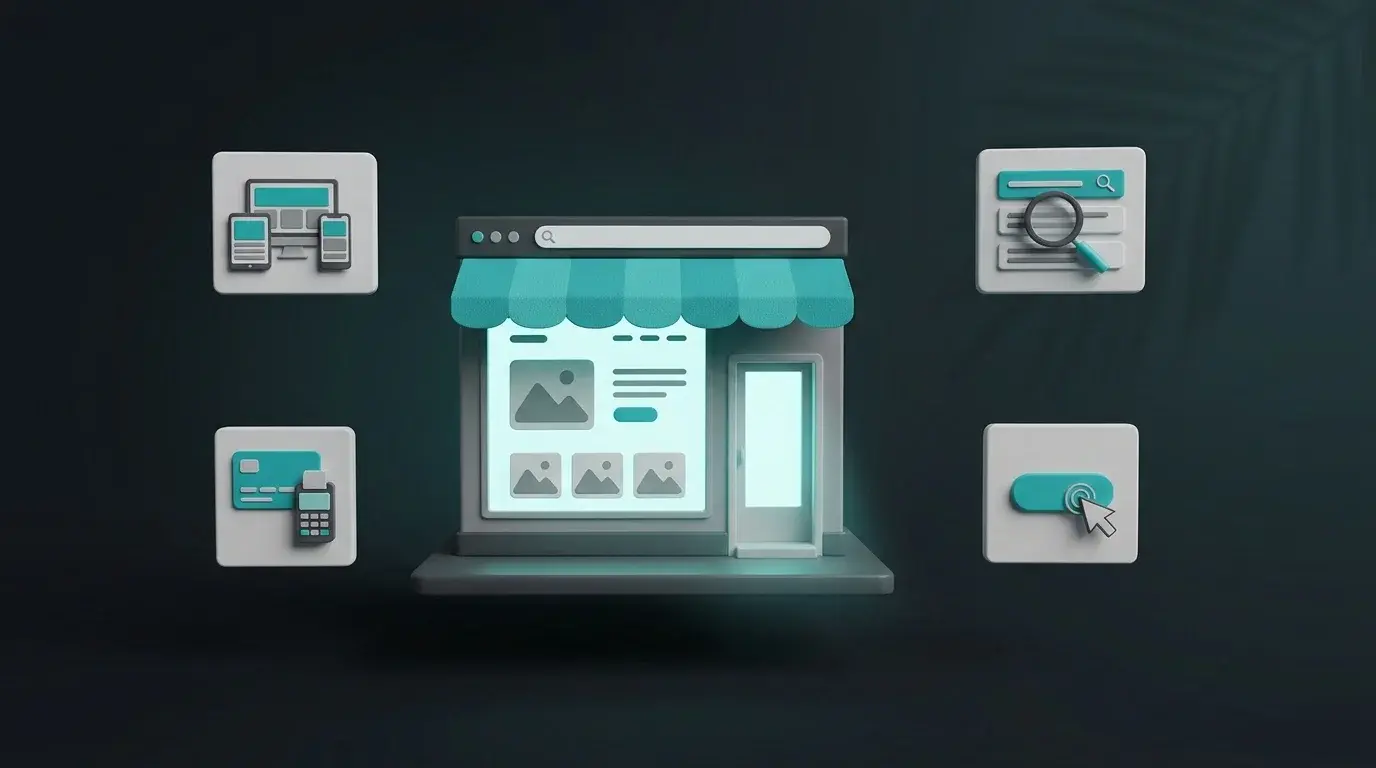


A business website does not need to be large. It needs to answer, quickly and on a phone, the few questions a customer has before they contact you: what do you do, is it right for me, what does it cost, can I trust you, and how do I reach you?
This checklist sets out the five pages every business website needs, what to put on each, the pages to add as you grow, and the essentials behind them that visitors never see but always notice.
The five pages every business website needs
Home
The first page answers "am I in the right place?" in a few seconds: what you do, for whom, and where. Put one clear button to the next step, such as calling, sending a WhatsApp message or asking for a quote.
About
Who you are, since when, and where you work. Real photographs of your team and your premises do more for trust than any claim. Keep it short and specific.
Services or products
Each thing you sell, what it includes, and its price, or at least a "from" price. A visitor who cannot find a price often leaves to find one elsewhere.
Projects, gallery or reviews
Proof of your work: photographs of real jobs, projects you have finished, or reviews from real clients with their names. Never use made-up reviews; customers can tell, and so can search engines.
Contact
Your phone number, WhatsApp, email address, street address, opening hours and a map, with a short form for people who prefer to write. Put your phone number and a WhatsApp button on every page as well, not only here.
What each page must answer
| Page | The visitor's question | What to put |
|---|---|---|
| Home | Am I in the right place? | What you do, for whom, where; one button to the next step |
| About | Can I trust them? | Who you are, since when, real photographs |
| Services or products | What do they sell, and what does it cost? | Each service with what is included and a price |
| Projects or reviews | Are they good at it? | Real work and real clients' words |
| Contact | How do I reach them? | Phone, WhatsApp, email, address, hours, a map, a form |
Pages to add as you grow
- A page for each main service, so that each can be found by the people searching for it.
- Questions and answers, for the things customers ask you every day.
- A blog, if you will keep writing for it. A blog last updated years ago does more harm than none.
- Careers, when you are hiring.
- A privacy policy, explaining what you do with the details people send through your forms, and which tools, such as analytics, you use.
- Terms and a return policy, if you sell online. Payment gateways check for them: PayHere's own guidance says a website must show its terms, a return policy and a privacy policy, as well as the business's contact details, before it is approved.
The essentials behind the pages
A business website can have every page and still lose customers if these are missing:
- It works on a phone, because many of your visitors will see it on one.
- It loads quickly, even on a slow connection.
- It shows the padlock: a security certificate, so that browsers do not warn visitors away.
- It is on your own domain, with email at the same name, such as info@yourcompany.lk. Our guide to registering a .lk domain explains how, and our comparison of Google Workspace and webmail helps you choose the email.
- Each page has its own title and description, the words search engines show under your name.
- It is linked to your Google Business Profile, with the same name, address and phone number on both.
- It is kept up to date: prices, opening hours, and the software it runs on.
How many pages do you need?
Most small businesses start with five pages and add more as they grow. Our packages follow the same path:
- Starter, LKR 45,000: five pages, ready in 5 days.
- Premium, LKR 92,000: ten pages, with pages for products or services and a video gallery, ready in 10 days.
- E-Commerce, LKR 186,000: unlimited pages and products, with payment gateway integration, ready in 15 days.
Each includes a .com or .lk domain name and hosting for the first year, a security certificate, email at your own domain, a training session and lifetime maintenance. All prices are exclusive of VAT. Our web design price guide explains what changes the price, and our projects show what we have built.
Common mistakes
- No prices anywhere.
- Only stock photographs, so nothing on the website looks like your business.
- The phone number hidden at the bottom of one page.
- News from three years ago on the home page.
- A contact form nobody checks.
Questions about business website pages
What pages does a business website need?
Five to start: home, about, services or products, projects or reviews, and contact. Add a page for each main service, questions and answers, and a privacy policy as you grow.
How many pages should a small business website have?
Five pages are enough for most small businesses at the start. Ten suit a business with several services or products.
Does my business website need a privacy policy?
If your website collects people's details through a form, or uses analytics, it should explain what you do with that information. If you take payments online, gateways such as PayHere ask to see one.
Should I put prices on my business website?
Yes, where you can, or at least a "from" price. Visitors who cannot find a price often leave to find one elsewhere.
What should be on a contact page?
Your phone number, WhatsApp, email address, street address, opening hours and a map, with a short form. Put your phone number and a WhatsApp button on every page as well.
How much does a five-page business website cost in Sri Lanka?
At GIXEZ IT, LKR 45,000 for the Starter package, with the domain and hosting for the first year, ready in 5 days. All prices are exclusive of VAT.
Ready to plan your website?
See what each of our web design packages includes, read about our web design and development service, or tell us about your business and we will suggest the pages it needs.