Tourism Website Design in Sri Lanka: A Checklist
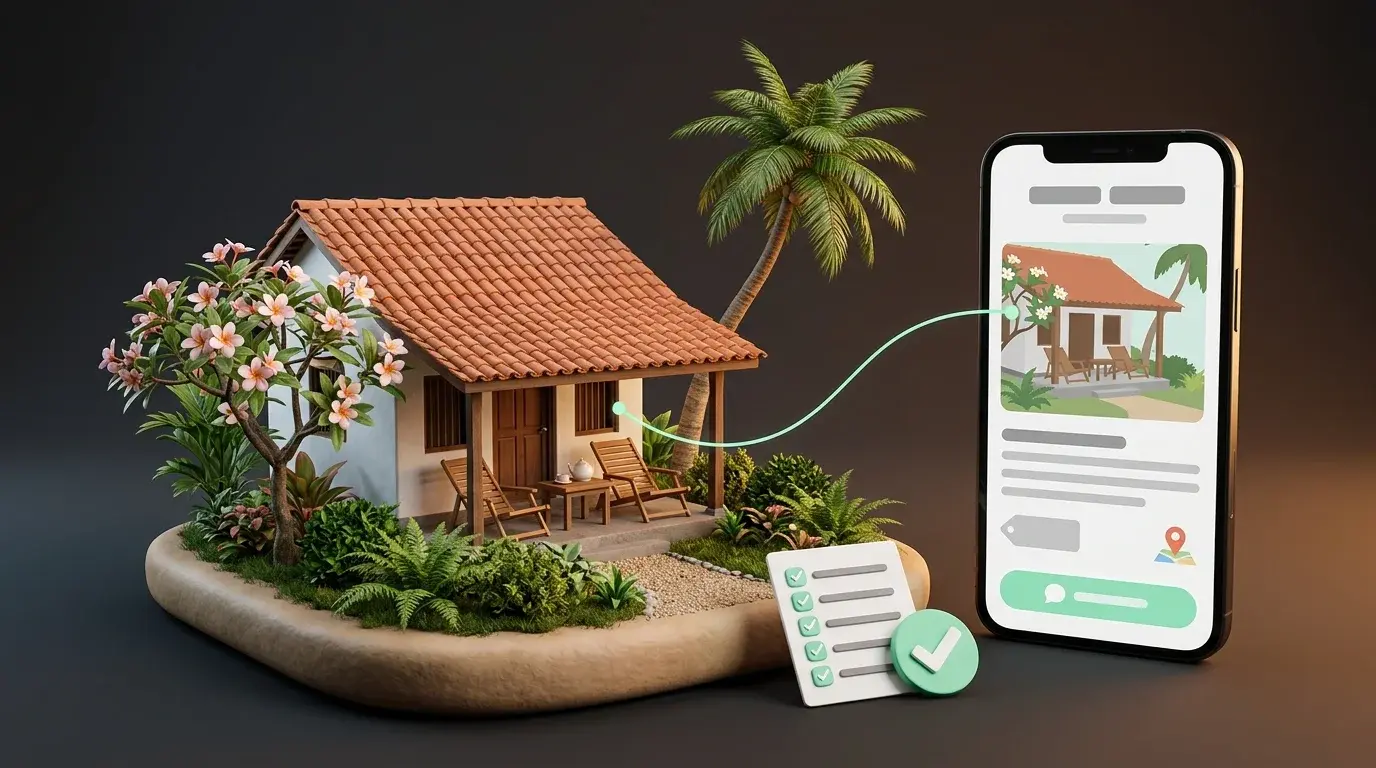


A visitor choosing where to stay or which tour to take in Sri Lanka usually decides on a phone, often from another country, and often before they have spoken to anyone. Your website has to answer their questions without you.
This checklist sets out what good tourism website design in Sri Lanka covers: the pages every hotel, guesthouse and tour operator needs, how to take bookings and payments from abroad, and what the Sri Lanka Tourism Development Authority (SLTDA) asks of a registered travel agency's website.
Who this checklist is for
- Guesthouses, homestays, villas and small hotels
- Tour operators and travel agencies
- Anyone selling an experience to visitors, such as a surf school, a cooking class or a safari jeep
The pages every tourism website needs
Whatever you offer, a visitor looks for the same things. Tick each one:
- What you offer, with prices. Each room or tour on a page of its own, with what is included. A "from" price is better than none.
- Your own photographs. Real rooms, real views, real tours. A visitor who arrives to find something else writes the review you least want.
- Where you are and how to get there. A map, the distance from the airport or the nearest town, and how guests usually travel to you.
- How to book or ask. WhatsApp, phone and email on every page, so that a question takes one tap.
- Your terms. The deposit, the cancellation rules, check-in and check-out times, and what happens if a guest arrives late.
- Reviews from real guests. Link to your Google reviews and to the booking sites where guests have reviewed you. Never write one yourself.
- The questions guests ask you most. Airport pick-up, breakfast, parking, how to pay. Answer each on the website once, and you answer it for everyone.
- Your full contact details, with your address in Sri Lanka.
For a guesthouse or a hotel
- A page for each kind of room: its size, its beds, its view, what is included and its price. A guest who cannot tell two rooms apart books neither.
- Prices by season, if yours change between the busy and the quiet months.
- Your Google Business Profile, linked from the website. It puts you on Google Maps with your photographs and reviews. Use exactly the same name, address and phone number on both.
- Your listings on the booking sites, kept. Booking.com, Airbnb and Agoda bring guests who would not find you otherwise, and each takes a commission on the bookings it brings; your contract with each gives the rate. Your own website is where a returning guest, or one who found you on Google, books without that commission.
For a tour operator or a travel agency
- A page for each tour: the itinerary day by day, what is included and what is not, the price per person and the size of the group.
- Who will guide your guests, and in which languages.
- The SLTDA's requirements, if you are registered or registering. The authority's registration requirements for 2026 say a travel agency "shall maintain an integrated website". It is to show:
- Tour information
- General tourist information
- Terms and conditions
- Valid contact details, including the postal address, telephone number and email address
- Emergency contacts
- The correct Sri Lanka Tourism promotional web banner, images and videos
The same document says that the website is among the things the SLTDA's inspectors look at, with the name board and the business itself, and that the registration is issued in the name on your business registration. Put that same name on your website.
Taking bookings
There are three ways, and many businesses use more than one:
- Enquiries by WhatsApp, phone or a form. You confirm each booking yourself. It suits most guesthouses and small tour operators, and it costs nothing per booking.
- The booking sites. They show your availability, take the booking and often the payment, for their commission.
- A booking system on your own website, with a calendar of free rooms or tour dates and a deposit paid online. This is a web application, built to your needs and priced by estimate.
Taking payment from visitors abroad
A deposit paid in advance is the surest way to keep a booking. To take it by card from a guest abroad:
- A payment gateway on your website. PayHere, a Sri Lankan gateway, accepts US dollars on its free Lite plan, and euros, pounds and Australian dollars as well on its Plus and Premium plans. It pays you in rupees, and charges 1.0% more on a payment in a foreign currency, according to its published fees on 19 October 2026.
- A payment link, sent by WhatsApp or email, for a deposit on a booking you have agreed. PayHere offers these on every plan, with no website needed.
Before a gateway approves you, your website must show your terms, a return or cancellation policy, a privacy policy and your business's contact details.
Which languages your website needs
English first. The SLTDA's own figures show where visitors came from: of the 1,498,749 who arrived between 1 January and 23 August 2026, the largest groups came from India (374,820), the United Kingdom (147,089), China (98,801), Germany (87,869) and Russia (80,533), according to the authority's weekly report.
Add a second language when many of your own guests share it: German for a hotel that German travellers return to, Russian or Chinese for a tour operator that sells to those markets. Have it translated by a person who speaks it. A page translated badly loses the guest a good page would have won.
When to have it ready
Sri Lanka's busiest months are December to February. In the SLTDA's figures, 258,928 visitors arrived in December 2025, 277,327 in January 2026 and 279,328 in February, against 124,551 in June. Guests plan those trips weeks ahead, so a tourism website should be live before November.
A name of your own matters too. If most of your guests are abroad, our guide to registering a .lk domain explains when a .com serves a hotel better, and when to hold both.
What a tourism website costs
Our web design packages have fixed prices, exclusive of VAT. Which one fits depends on what the website has to do:
| Your business | The package that fits | Price |
|---|---|---|
| A guesthouse or homestay with a few rooms | Starter: 5 pages and a photo gallery | LKR 45,000 |
| A hotel, or a tour operator with several tours | Premium: 10 pages, a video and photo gallery, a WhatsApp chat button | LKR 92,000 |
| Rooms or tours sold and paid for online | E-Commerce: unlimited pages and payment gateway integration | LKR 186,000 |
| Live availability and online booking | A web application | By estimate |
Each package includes a .com or .lk domain name and hosting for the first year. For what a website costs after that, and how to compare quotes, see our web design price guide.
Questions about tourism websites in Sri Lanka
What should a hotel website include?
A page for each kind of room with its price, your own photographs, a map and directions, your terms and cancellation policy, links to your reviews, and WhatsApp, phone and email on every page.
Do I need online booking on my website?
Not at first. Most guesthouses and small tour operators take bookings by WhatsApp, phone or a form and confirm them by hand. A booking system with a live calendar is worth building when you handle too many bookings to confirm one by one.
Can guests from abroad pay on my website?
Yes, through a payment gateway. PayHere, for example, accepts US dollars on every plan and euros, pounds and Australian dollars on its larger plans, and pays you in rupees. A payment link sent by WhatsApp or email works without a website.
What does tourism website design in Sri Lanka cost?
At GIXEZ IT, LKR 45,000 for a five-page website, LKR 92,000 for a ten-page website and LKR 186,000 for one that takes payments, exclusive of VAT. A booking system is priced by estimate.
Should my website be in more than one language?
English first. Add a second language when many of your guests share it, and have it translated by a person who speaks it.
What must a travel agency's website show for SLTDA registration?
Tour information, general tourist information, terms and conditions, contact details with a postal address, phone number and email, emergency contacts, and the Sri Lanka Tourism promotional web banner, images and videos.
Ready before the season?
See what each of our web design packages includes, read about our web design and development service, or tell us about your hotel or tours and we will suggest the website that fits.